
Cloud untuk Rakyat
7 Modules · 6 Video Lessons · English · Learn at your own pace
0 of 4 knowledge checks completed
What is Cloud Computing?
Cloud computing has changed how we use technology, making it easier to store data, run applications, and access powerful computing resources without needing expensive hardware. Explore what cloud computing is, how it started, and the key services that make it useful.
Three Core Cloud Services
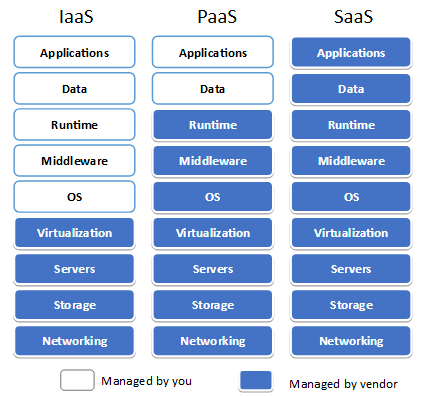
Provides virtualized computing resources.
Offers a platform for developing and managing applications.
Delivers ready-to-use software applications hosted in the cloud.
Together these services help businesses scale without extensive on-site infrastructure. A startup might use IaaS to host its website and SaaS for customer relationship management.
Knowledge Check 1
Which statement accurately describes the three main types of cloud computing services?
What is IaaS?
Infrastructure as a Service (IaaS) gives businesses on-demand computing resources without having to purchase and maintain all physical hardware. Learn how it works, its features, applications, benefits and challenges.
Case Studies
Uses AWS to scale computing capacity during high-traffic shopping seasons and scale back afterwards.
Read Zalora case study ↗Uses Google Cloud to improve operations, revenue and customer experience.
Read AirAsia case study ↗Benefits of IaaS
No upfront physical hardware costs.
Adjust resources to demand.
The provider manages physical hardware.
Limitations of IaaS
Potential vendor lock-in.
Cloud resources must be configured correctly.
Virtual environments require expertise.
Knowledge Check 2
Which is NOT a component of Infrastructure as a Service (IaaS)?
What is PaaS?
Platform as a Service (PaaS) provides a cloud-based environment for building, deploying and managing applications without dealing with underlying infrastructure complexities.
Case Study
A telecom provider launched a cloud solution to support enterprise digital transformation and more agile application deployment.
Read the telecom provider case study ↗
Benefits of PaaS
Automates application deployment and updates.
Connects with other cloud services.
Offers built-in security features.
Pay for resources consumed.
Limitations of PaaS
May not suit highly customized applications.
Storing sensitive data in the cloud requires care.
Connecting existing systems can be complex.
Knowledge Check 3
Which is NOT a primary benefit of PaaS for application development?
What is SaaS?
Software as a Service (SaaS) delivers software over the internet without requiring local installation. Explore application software, cloud infrastructure, subscription management, user interfaces, benefits and limitations.
Case Studies
A Malaysian life insurance company uses WhatsApp for convenient policy delivery.
Read the case study ↗A Malaysian conglomerate uses Office 365 to support collaboration.
Read the case study ↗Benefits of SaaS
Access applications from devices with an internet connection.
Providers handle software updates and maintenance.
Limitations of SaaS
Data Security Concerns
Storing sensitive data in the cloud may create risks if protection is insufficient or a breach occurs.
Performance Issues
Applications rely on internet connectivity; slow or unreliable connections may affect performance.
Knowledge Check 4
Which is a key limitation of SaaS for business applications?
What is FaaS?
Function as a Service (FaaS) and serverless computing let developers run applications without managing servers. Learn about event-driven execution, stateless processing, containerization and real-world use cases.
Case Study: Serverless in Education
A Malaysian technology university uses AWS serverless technology to reduce costs while maintaining high availability and reliable experiences for users.
Accelerating Students’ Path to Cloud Careers ↗
Functions respond to events or triggers.
Functions can run without retaining state between executions.
Infrastructure management is handled by the provider.
Deployment Model
Cloud deployment models describe how cloud resources are hosted, accessed and managed. Explore Private, Public, Community and Hybrid Cloud models and their implications for security, control and scalability.
Four Cloud Deployment Models
Cloud environment dedicated to a single organization.
Cloud services provided to customers over shared provider infrastructure.
Infrastructure shared by organizations with common needs.
Combines different environments for flexibility and control.
Organizations choose a deployment model based on data sensitivity, compliance needs, security, control and operational flexibility.
Adoption Challenges & Considerations
Organizations moving to cloud computing face challenges in cost, integration, performance, vendor dependency and security. This final module outlines those challenges and the considerations that help organizations make informed decisions.
Key Adoption Challenges
Costs fluctuate with usage patterns.
Connecting cloud services with legacy systems can be difficult.
Latency and internet dependency affect reliability.
Proprietary technologies can limit portability.
Cloud management needs specialized expertise.
Regulatory obligations and cross-border data transfers.
Transitioning existing workloads can introduce risks.
Multiple environments need monitoring and coordination.
Threats evolve and require ongoing updates.
Before Selecting Cloud Services
- Cost: Use AWS Cost Explorer, Microsoft Cost Management or Google Cloud billing tools.
- Integration: Evaluate tools that connect existing systems.
- Performance: Consider content delivery networks and reliability requirements.
- Vendor Lock-In: Consider portable or open-source approaches where appropriate.
- Security: Evaluate encryption, identity and access management (IAM).
Conclusion
This course covered cloud computing fundamentals, IaaS, PaaS, SaaS, FaaS, deployment models and adoption challenges. Continue exploring how cloud technologies can support effective, secure digital services.
Congratulations!
You have reached the end of Cloud untuk Rakyat. Review any modules or revisit the learning materials at any time.
This independent learning page does not issue or email an official certificate.
Independent educational presentation based on course material provided by the user. Videos and images are loaded from their respective external hosts. No official Rakyat Digital certificate is issued by this page.